Recycled Plastic Properties Database
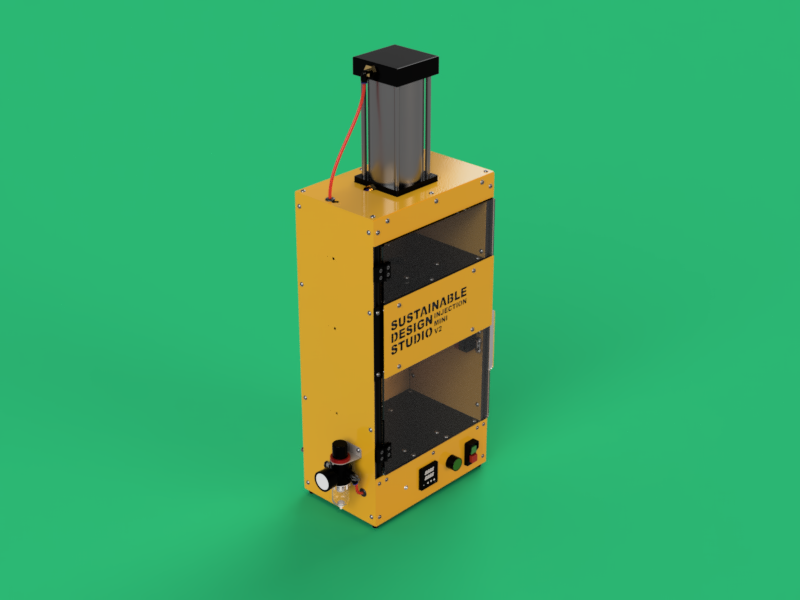
Real test data for 8 recycled plastics, all tested on the SDS Injection Mini V2. Melt temperatures, MFI values, shrinkage rates, density, flexural modulus, and observational notes from hands-on testing. Use this database alongside our MFI guide and Plastic Types reference to choose the right material for your project.
High Density Polyethylene HDPE
| Property | Value |
|---|---|
| Average Shrink Rate | 1.5 to 3% |
| MFI Range | 0.2 to 20 g/10min (grade dependent) |
| Density | 0.941 to 0.965 g/cm³ |
| Flexural Modulus | 800 to 1,500 MPa |
| SDS Flow Score | 45.6 cm |
| SDS Thickness Score | 0.75 mm |
| Optimum Melt Temperature | 190°C |
| Source Tested | Film canisters (granulate) |
| Colour | White |
| Odour Level | Very low |
Advantages
Excellent chemical resistance. High impact strength. Low moisture absorption. Good low temperature performance. Lightweight.
Disadvantages
Poor UV resistance unless stabilized. Lower strength compared to engineering plastics. Limited high temperature performance.
SDS Test Observations
Flows very well compared to other types of HDPE. Not very much flashing (struggles at anything less than 1mm). The surface has a slightly waxy feel. Good release from moulds with minimal sticking.
Tested on the Injection Mini V2. View machine specs and pricing.
Polypropylene PP
| Property | Value |
|---|---|
| Average Shrink Rate | 1.5 to 2.5% |
| MFI Range | 8 to 20 g/10min |
| Density | 0.905 to 0.92 g/cm³ |
| Flexural Modulus | 1,300 to 1,800 MPa |
| SDS Flow Score | 42.75 cm |
| SDS Thickness Score | 1 mm |
| Optimum Melt Temperature | 220°C |
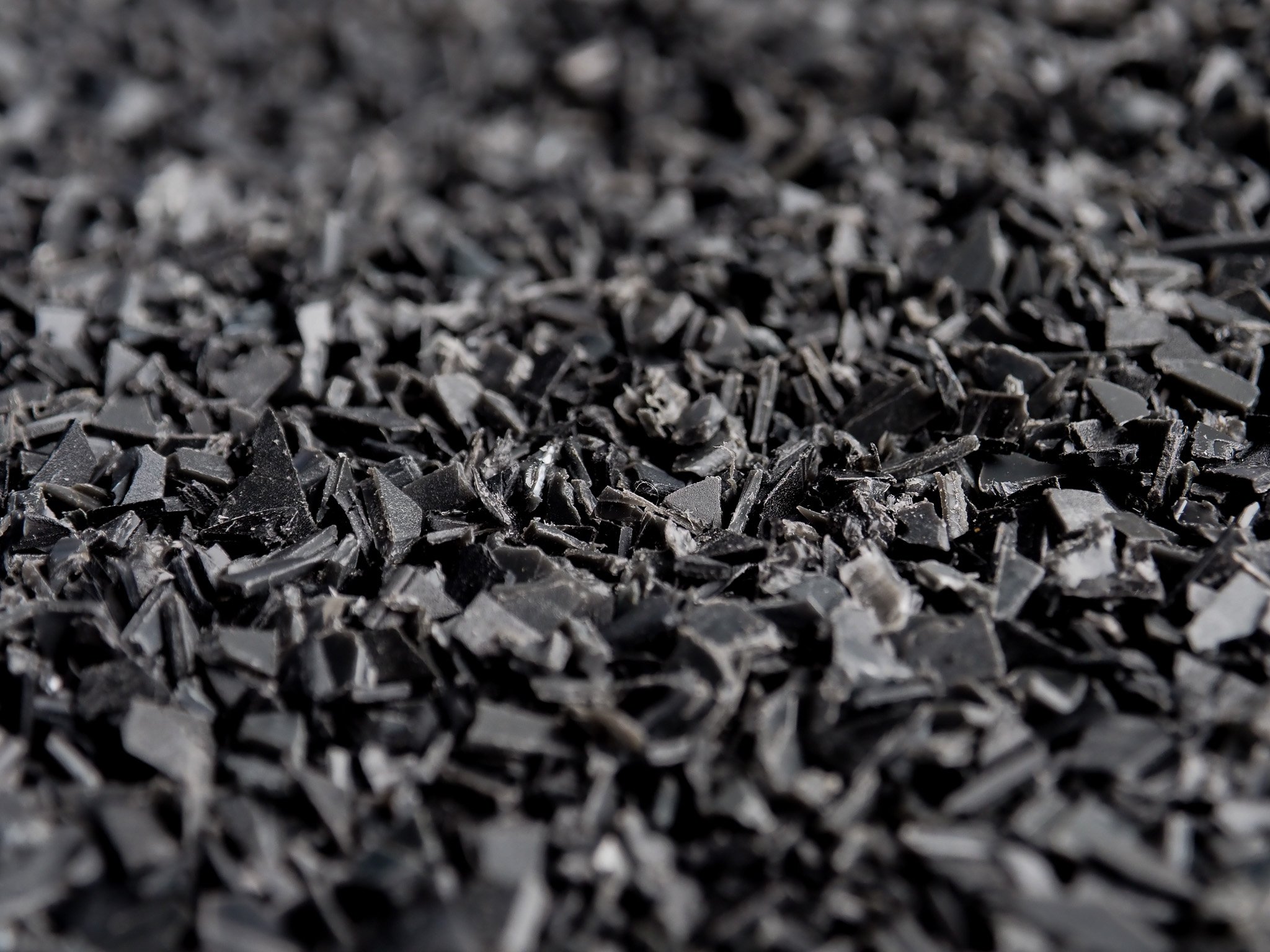
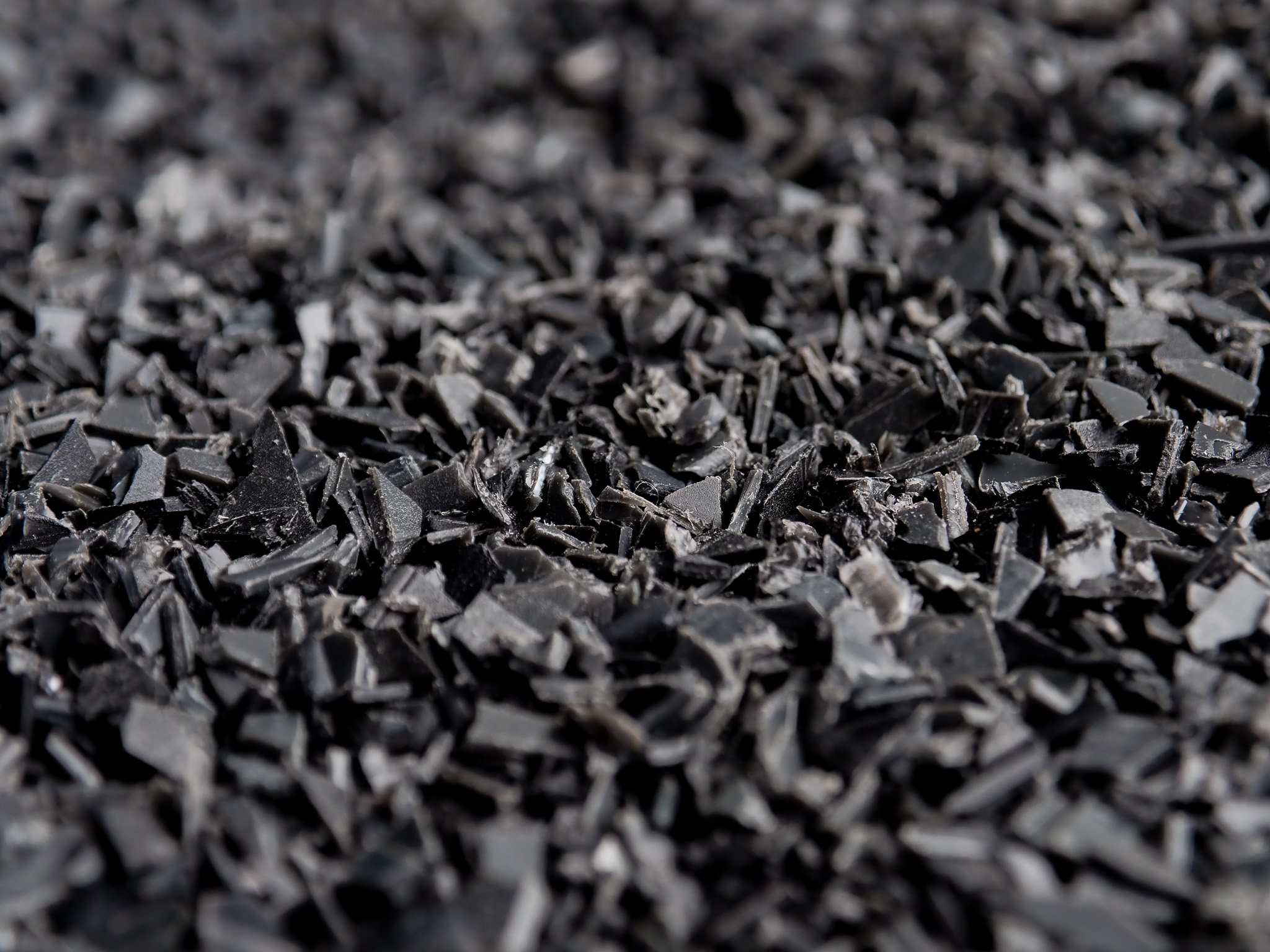
| Source Tested | DVD cases (granulate) |
| Colour | Black |
| Odour Level | Low |
Advantages
High chemical resistance. Lightweight. Good fatigue resistance. Low cost.
Disadvantages
Poor UV resistance. Lower impact strength in cold temperatures. Difficult to bond with adhesives.
SDS Test Observations
The finished surface is very smooth, reflects the smooth surface of the mould, and is almost shiny. The plastic drips from the nozzle if not blocked by the jack. The black plastic stays around in the barrel for a long time after switching material.
Tested on the Injection Mini V2. Also compatible with the Arbour Injection Machine V2.
Polyethylene Terephthalate Glycol PETG
| Property | Value |
|---|---|
| Average Shrink Rate | 0.3 to 0.7% |
| MFI Range | 6 to 22 g/10min |
| Density | 1.27 g/cm³ |
| Flexural Modulus | 2,000 to 2,400 MPa |
| SDS Flow Score | 74.9 cm |
| SDS Thickness Score | 0.6 mm |
| Optimum Melt Temperature | 240°C |
| Source Tested | 3D printer filament (test print) |
| Colour | Transparent green |
| Odour Level | Medium |
Advantages
High impact resistance. Transparent. Excellent chemical resistance. Easily thermoformed and 3D printed. Low shrinkage.
Disadvantages
Prone to moisture absorption, requiring drying before processing. Can be more brittle compared to other plastics like PP. Higher cost compared to standard PET.
SDS Test Observations
Remained transparent after injection. Flowed out the nozzle like honey/syrup if the jack wasn't in place. The material needed to be dried before testing; as a result, bubbles developed and these caused it to overflow out of the barrel when heating. Very brittle and easy to crack/break getting items out of the mould.
Tested on the Injection Mini V2.
Polylactic Acid PLA
| Property | Value |
|---|---|
| Average Shrink Rate | 0.3 to 0.5% |
| MFI Range | 6 to 8 g/10min |
| Density | 1.24 g/cm³ |
| Flexural Modulus | 2,996 to 3,750 MPa |
| SDS Flow Score | 69 cm |
| SDS Thickness Score | 1.5 mm |
| Optimum Melt Temperature | 200°C |
| Source Tested | 3D printer filament (3D printed shot) |
| Colour | Yellow |
| Odour Level | Medium |
Advantages
Biodegradable. Low shrinkage. Non-toxic.
Disadvantages
Brittle. Low heat resistance. Prone to moisture absorption. Limited chemical resistance. Lower durability outdoors.
SDS Test Observations
Use a cool mould for easy demoulding. PLA drips out the nozzle like syrup without the jack. Dry PLA to prevent bubbles and overflow.
Tested on the Injection Mini V2. PLA can be shredded and re injected using the Shredder Mini V2.
Acrylonitrile Butadiene Styrene ABS
| Property | Value |
|---|---|
| Average Shrink Rate | 0.4 to 0.9% |
| MFI Range | 1 to 8 g/10min |
| Density | 1.03 g/cm³ |
| Flexural Modulus | 1,900 to 2,300 MPa |
| SDS Flow Score | 12 cm |
| SDS Thickness Score | 3.5 mm |
| Optimum Melt Temperature | 230°C |
| Source Tested | 3D printer filament (test print pucks) |
| Colour | Yellow |
| Odour Level | Extremely high |
Advantages
Strong and impact resistant. Heat resistant. Excellent dimensional stability. Balanced mechanical properties.
Disadvantages
Strong odour when molten. Poor UV resistance. Low chemical resistance to some solvents. Flammable without additives. Not biodegradable.
SDS Test Observations
Heat the mould to prevent warping and improve finish. Dry ABS well to avoid bubbles and weak spots from moisture. Control injection temperature carefully: too low makes ABS viscous and hard to fill, too high can cause burning.
Tested on the Injection Mini V2. For larger moulds, consider the Arbour Injection Machine V2.
Thermoplastic Polyurethane TPU
| Property | Value |
|---|---|
| Average Shrink Rate | 0.5 to 1% |
| MFI Range | 5 to 15 g/10min |
| Density | 1.23 g/cm³ |
| Flexural Modulus | 35 MPa |
| SDS Flow Score | 39.3 cm |
| SDS Thickness Score | 0.7 mm |
| Optimum Melt Temperature | 180°C |
| Source Tested | 3D printer filament (3D printed shot) |
| Colour | Red |
| Odour Level | Low |
Advantages
Highly flexible. Good abrasion resistance. Elasticity. Chemical resistance. Weather and UV resistance.
Disadvantages
Moderate heat resistance. Prone to hydrolysis. Can be sensitive to low temperatures. Limited dimensional stability. Softness limits heavy load applications.
SDS Test Observations
Dry TPU before use to avoid bubbles and weak spots. Thickness results were good, suitable for thin parts.
Tested on the Injection Mini V2 with adjusted pressure settings.
Thermoplastic Elastomer TPE
| Property | Value |
|---|---|
| Average Shrink Rate | 1.0 to 3.5% |
| MFI Range | 5 to 25 g/10min |
| Density | 0.88 to 1.15 g/cm³ |
| Flexural Modulus | 1 to 500 MPa (varies widely) |
| SDS Flow Score | 84.8 cm |
| SDS Thickness Score | 0.5 mm (lowest score) |
| Optimum Melt Temperature | 250°C |
| Source Tested | Unknown (pellets) |
| Colour | Clear/yellow |
| Odour Level | Medium (slight rubber smell) |
Advantages
Highly flexible and elastic. Soft-touch feel. Good impact resistance. Recyclable and can be re-moulded. Resistant to many chemicals.
Disadvantages
Higher cost compared to standard plastics. May degrade in extreme temperatures. Requires careful processing to avoid deformation. Can absorb moisture.
SDS Test Observations
Strong smell when opening the mould, which also lingers on the product. Very fluid material with lots of flashing if the mould is too warm. White smoke is generated when melting.
Tested on the Injection Mini V2.
Nylon/Polyamide 6 with 15% Glass Fiber PA6-GF15
| Property | Value |
|---|---|
| Average Shrink Rate | 0.3 to 1.2% |
| MFI Range | 15 to 30 g/10min |
| Density | 1.25 to 1.40 g/cm³ |
| Flexural Modulus | 4,500 to 6,500 MPa |
| SDS Flow Score | 35.1 cm |
| SDS Thickness Score | 2.1 mm |
| Optimum Melt Temperature | 250°C |
| Source Tested | Unknown (pellets) |
| Colour | Black |
| Odour Level | High |
Advantages
High strength and stiffness. Excellent resistance to wear and abrasion. Enhanced dimensional stability due to glass fiber reinforcement. Good heat resistance. Low moisture absorption compared to unreinforced PA6.
Disadvantages
Higher brittleness compared to standard PA6 due to glass fibers. More difficult to process and mould. Can be abrasive to tooling and equipment. Requires careful control of temperature and pressure during moulding.
SDS Test Observations
The surface has a fine-gritted texture. The material is very strong, barely flexes and is hard to break.
Tested on the Injection Mini V2. Glass filled nylon requires higher temperatures; the Arbour Injection Machine V2 is also suitable.
Low Density Polyethylene LDPE
| Property | Value |
|---|---|
| Average Shrink Rate | 1.5 to 5% |
| MFI Range | 2 to 20 g/10min (grade dependent) |
| Density | 0.91 to 0.94 g/cm³ |
| Flexural Modulus | 150 to 250 MPa |
| SDS Flow Score | 28.2 mm |
| SDS Thickness Score | 1 mm |
| Optimum Melt Temperature | 210°C |
| Source Tested | Wheel hub caps (granulate) |
| Colour | Yellow |
| Odour Level | Very low |
Advantages
Very flexible and tough. High impact resistance even at low temperatures. Good chemical resistance. Low moisture absorption. Lightweight with low density.
Disadvantages
Poor UV resistance. Low stiffness and tensile strength. High shrinkage rate can cause warping. Not suitable for high temperature applications. Difficult to bond with adhesives.
SDS Test Observations
Very low odour during processing. Flow improved at higher melt temperatures (210°C gave the best results). Consistent 1 mm thickness across all tests. Similar processing characteristics to HDPE but with noticeably more flexibility in the finished part.
Tested on the Injection Mini V2.
High Impact Polystyrene HIPS
| Property | Value |
|---|---|
| Average Shrink Rate | 0.4 to 0.7% |
| MFI Range | 4 to 20 g/10min (grade dependent) |
| Density | 1.04 to 1.06 g/cm³ |
| Flexural Modulus | 1,300 to 2,600 MPa |
| SDS Flow Score | 21.2 mm |
| SDS Thickness Score | 1.9 mm |
| Optimum Melt Temperature | 230°C |
| Source Tested | Pellets |
| Colour | Natural |
| Odour Level | Low |
Advantages
Good impact resistance. Excellent dimensional stability. Easy to machine and fabricate. Low cost. Low shrinkage rate for consistent moulding.
Disadvantages
Poor UV resistance. Brittle compared to engineering plastics. Limited chemical resistance to solvents. Flammable without additives. Not suitable for outdoor use.
SDS Test Observations
Low flow score of 21.2 mm indicates relatively high viscosity. Thickness results were consistent at around 1.5 to 2.5 mm. The material processed cleanly with low odour. Good dimensional stability in finished parts.
Tested on the Injection Mini V2.
Thermoplastic Rubber TPR (22A)
| Property | Value |
|---|---|
| Average Shrink Rate | 1.5 to 3% |
| MFI Range | 5 to 30 g/10min (hardness dependent) |
| Density | 0.90 to 0.97 g/cm³ |
| Flexural Modulus | 1 to 20 MPa |
| SDS Flow Score | 44.7 mm |
| SDS Thickness Score | 0.7 mm |
| Optimum Melt Temperature | 210°C |
| Source Tested | Unknown (pellets) |
| Colour | Black |
| Odour Level | Low |
Advantages
Highly flexible and elastic. Excellent abrasion resistance. Good weathering and chemical resistance. No vulcanisation required. Can be recycled and re-moulded multiple times.
Disadvantages
Low stiffness and load bearing capacity. Properties vary significantly with formulation. Limited high temperature resistance. Can be more expensive than standard rubbers.
SDS Test Observations
Very easy material to work with. Some flashing observed, particularly when the mould was warm. Excellent thickness score of 0.7 mm, suitable for thin walled parts. The material flows well and fills the mould consistently.
Tested on the Injection Mini V2.
Polybutylene Adipate Terephthalate PBAT
| Property | Value |
|---|---|
| Average Shrink Rate | 1 to 3.6% |
| MFI Range | 3 to 5 g/10min |
| Density | 1.26 g/cm³ |
| Flexural Modulus | 126 MPa |
| SDS Flow Score | 56.1 mm |
| SDS Thickness Score | 1.9 mm |
| Optimum Melt Temperature | 200°C |
| Source Tested | Phone cases (granulate) |
| Colour | Black |
| Odour Level | Medium (coffee like smell) |
Advantages
Biodegradable and compostable. Good toughness and flexibility. High tear resistance. Similar mechanical properties to LDPE. Wide processing temperature window.
Disadvantages
Lower melting point than most plastics. Significant barrel expansion during heating. Can produce air bubbles if not dried properly. Higher cost than commodity plastics. Lower stiffness and strength.
SDS Test Observations
A lot of expansion in the barrel during heating. The material has a distinctive coffee like smell. Air bubbles can form in thicker sections. Best results at 200°C with consistent flow. The finished parts are flexible with good toughness.
Tested on the Injection Mini V2.