
Plastics: Identification
How to sort and identify different types of plastic before recycling with the Sustainable Design Studio machines, from simple hands-on tests to the Plastic Scanner app.
Why identify different plastics?
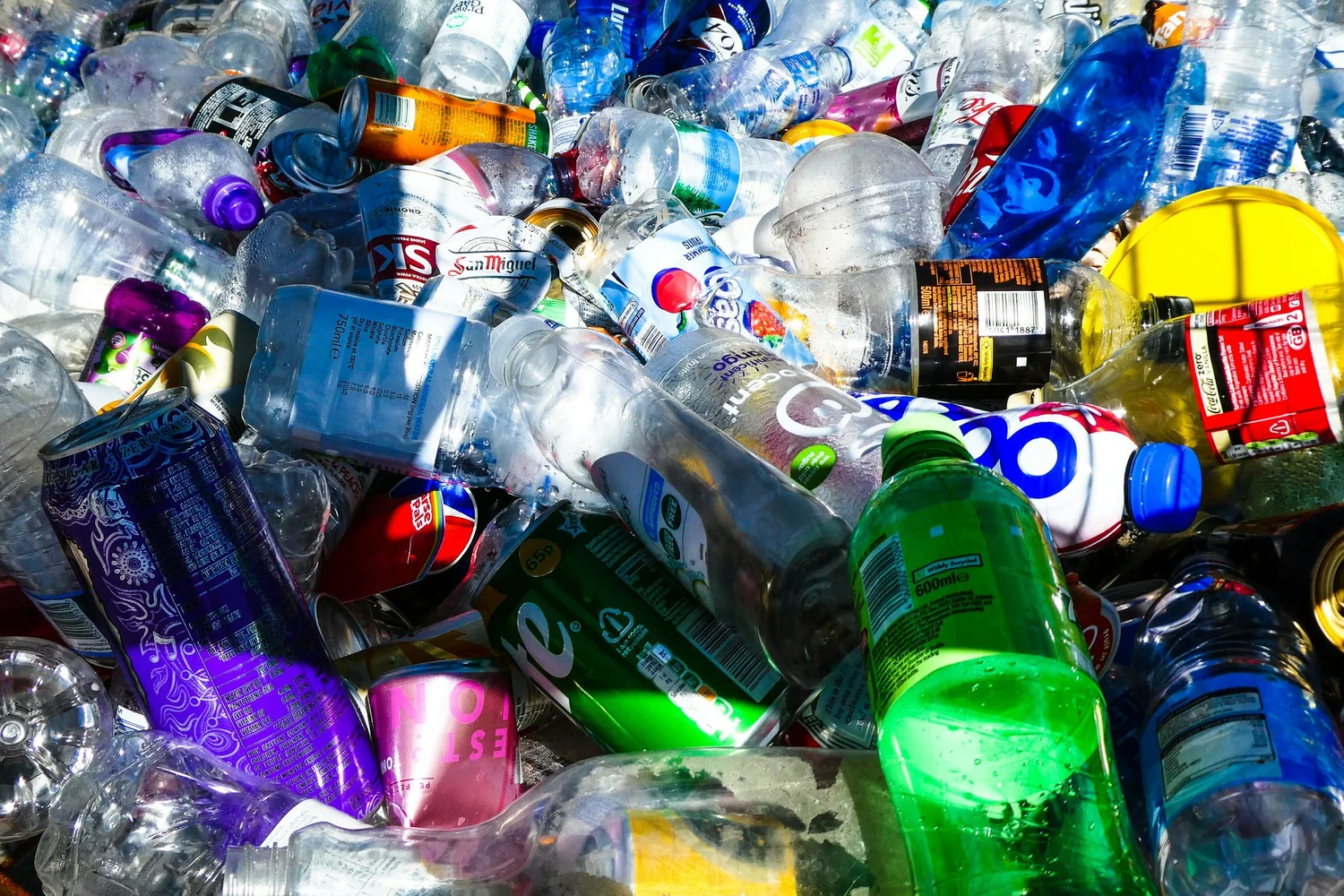
Every plastic type has different properties, from melting temperature to flow behaviour to chemical resistance. If you mix the wrong types together in the Desktop Shredder V2 or Injection Mini V2 you get weak parts, contamination, or in the case of PVC, harmful fumes. Sorting before you process is not optional. It is the foundation of good recycled output.
The good news is that identification does not require a lab. A combination of simple hands-on tests, float, burn, break, and smell, can narrow down most common plastics. And for fast, reliable results, the Plastic Scanner app can identify a plastic type from a photo in seconds.
Never mix plastics
Mixing different plastic types causes weak parts, accelerates microplastic breakdown, and can release harmful chemicals during processing. Always sort before you shred.
How to identify different plastic types
Most plastic items can be identified with a few low-cost tests. Start with a visual check, then confirm with one or two physical tests.
Resin identification code
Most products are stamped with a code, a number from 1 to 7 inside the recycling symbol, telling you exactly which plastic family the item belongs to. Check the base of containers, the inside of caps, or the back of panels. When it is too small or missing, the Plastic Scanner can identify it from a photo.

Float test
Every plastic has a specific density. Dropping a sample into liquids of known density separates plastics into groups by whether they float or sink. Water alone splits them in two: PP, LDPE, and HDPE float, everything else sinks.

Burn test
Held to a flame, each plastic produces a distinctive mix of flame colour, smoke, smell, and dripping. PE and PP burn clean and smell of candle wax. PS gives thick black smoke. PVC shows a green tinge and a sharp chlorine smell. Always work under extraction.

Break test
Bending or snapping a sample reveals its mechanical character. PP snaps cleanly, LDPE stretches and tears, PS and PLA shatter, and nylon flexes a long way first. Stress whitening at the bend is another clue, common in HDPE and PLA.

Smell test
Heating a small sample produces a characteristic smell. PP and PE smell of paraffin wax. PS is sweet and slightly chemical. Nylon smells of burnt hair. PVC is a sharp, unmistakable chlorine. Best used as a confirmation step alongside the burn test.

IR and app identification
Infrared spectroscopy reads a unique fingerprint for each plastic. For desktop recyclers, the Plastic Scanner uses your phone camera and machine learning to identify plastics from a photo, no special kit, free on iOS and Android.
Safety note
The float test is safe for any setting. The burn and smell tests involve heating plastic, which produces fumes. Always work in a well ventilated area or use fume extraction, and wear safety glasses and heat-resistant gloves. Never heat PVC intentionally, it releases hydrochloric acid gas.
If you are working in a school or shared workshop, check your local health and safety requirements first. For more, see Basic PPE.
Float test and density reference
A sample floats if it is less dense than the liquid and sinks if it is denser. Plain water at 1.00g/cm³ is the simplest starting point. PP, LDPE, and HDPE float, everything else sinks. Use a second liquid to separate within each group.
| Material | Type | Density (g/cm³) | In water |
|---|---|---|---|
| Ethanol or isopropyl alcohol | Test liquid | 0.79 | |
| PP (Polypropylene) | Plastic | 0.89 to 0.91 | Floats |
| LDPE (Low density PE) | Plastic | 0.91 to 0.93 | Floats |
| Vegetable oil | Test liquid | 0.92 | |
| HDPE (High density PE) | Plastic | 0.94 to 0.97 | Floats |
| Water, the dividing line at 1.00g/cm³ | |||
| PS (Polystyrene) | Plastic | 1.04 to 1.05 | Sinks |
| ABS | Plastic | 1.04 to 1.08 | Sinks |
| Ethylene glycol | Test liquid | 1.11 | |
| Saturated salt water | Test liquid | 1.12 | |
| Nylon (PA) | Plastic | 1.13 to 1.15 | Sinks |
| PMMA (Acrylic) | Plastic | 1.17 to 1.20 | Sinks |
| PLA | Plastic | 1.24 | Sinks |
| Glycerine | Test liquid | 1.26 | |
| PET | Plastic | 1.38 to 1.40 | Sinks |
| PVC | Plastic | 1.40 | Sinks |
Burn test reference
Hold a small sample, about 1cm, to the edge of a flame and observe four things: flame colour, smoke, smell, and whether it drips or self-extinguishes. Always work in a ventilated space, and never burn PVC intentionally.
| Plastic | Flame | Smoke | Smell | Drips? | Self-extinguishes? |
|---|---|---|---|---|---|
| PP | Yellow top, blue base | Minimal, clear | Candle wax, sweet | Yes | No |
| PE (LDPE/HDPE) | Yellow top, blue base | Minimal, clear | Candle wax, sweet | Yes | No |
| PS | Yellow, sooty | Thick black | Sweet, fruity, chemical | Minimal | No |
| ABS | Yellow, sooty | Thick black | Burnt rubber, acrid | Minimal | No |
| Nylon | Blue with yellow tip | Minimal | Burnt wool or hair | Yes | Yes |
| PET | Yellow, sooty | Black | Sour, acrid | Slight | Partially |
| PVC | Yellow, green at base | Thick black | Sharp chlorine, acrid | Slight | Yes |
| PMMA | Blue, clean | Minimal | Fruity, floral | Minimal | Sometimes |
| PLA | Yellow | Light | Slightly sweet | Slight | Partially |
PVC and the green flash
PVC produces hydrochloric acid gas when burned. If you see a green flash at the base of the flame or smell chlorine, stop immediately and ventilate. This is a useful identifier, but exposure should be minimised.
Break test reference
Take a thin sample and try to bend it. How it responds, whether it flexes, snaps, stretches, or whitens, narrows down the type.
| Plastic | Flexibility | Breaking pattern | Stress whitening |
|---|---|---|---|
| PP | Flexible, bends easily | Snaps cleanly | Moderate |
| LDPE | Very flexible | Stretches and tears gradually | Minimal |
| HDPE | Moderately flexible | Snaps cleanly | Yes, noticeable |
| PS | Rigid, brittle | Shatters or snaps suddenly | Minimal |
| ABS | Moderately rigid | Snaps cleanly | Moderate |
| PET | Moderate | Snaps with some stretch | Moderate |
| Nylon | Very flexible | Stretches significantly | Minimal |
| PVC | Moderately flexible | Bends before breaking | Minimal |
| PLA | Brittle, rigid | Snaps cleanly | Yes, pronounced |
Tip: If you bend a sample and see a visible white line at the crease, you are likely looking at HDPE or PLA. If it bends without any colour change and does not break, it is probably nylon or LDPE.
Quick identification summary
Use this table to cross-reference multiple test results and narrow down the plastic type. No single test is definitive, confirm with at least two.
| Plastic | Floats? | Flame | Smoke | Smell | Break |
|---|---|---|---|---|---|
| PP | Yes | Yellow/blue, drips | Clear | Candle wax | Snaps cleanly |
| LDPE | Yes | Yellow/blue, drips | Clear | Candle wax | Stretches, tears |
| HDPE | Yes | Yellow/blue, drips | Clear | Candle wax | Snaps, whitens |
| PS | No | Yellow, sooty | Black, thick | Sweet, fruity | Shatters |
| ABS | No | Yellow, sooty | Black, thick | Burnt rubber | Snaps cleanly |
| Nylon | No | Blue/yellow, drips | Clear | Burnt wool | Very flexible |
| PET | No | Yellow, sooty | Black | Sour, acrid | Snaps with stretch |
| PVC | No | Yellow/green | Black, thick | Chlorine, acrid | Bends, flexible |
| PLA | No | Yellow | Light | Slightly sweet | Snaps, whitens |
Why results sometimes vary, additives and blends
Pure plastics behave predictably in these tests. But most real-world products contain additives, plasticisers, UV stabilisers, impact modifiers, flame retardants, fillers, and colourants, that change density, flexibility, burn behaviour, and smell.
For example, polypropylene in its pure form is rigid and snaps cleanly when bent. But a pickleball is made from PP with elastomer additives that make it softer and more flexible, closer to how HDPE behaves in a break test. Tested without knowing this, you might misidentify it.
PVC pipe vs PVC cling wrap
Same base polymer, different plasticiser levels. One is rigid, the other soft and stretchy, the break test gives completely different results for each.
Flame retardants
Flame-retardant additives can change burn results. A material that would normally keep burning may self-extinguish instead.
Glass fibre and mineral fillers
Fillers increase density and can shift float results, a filled PP part might sink in water when unfilled PP would float.
Carbon black
A common UV stabiliser, carbon black masks flame colour and makes the burn test harder to read.
This is why no single test is definitive. Cross-reference at least two methods, and if results conflict, consider that additives may be the reason. The resin code (when present) or the Plastic Scanner will give you the base polymer regardless of additives.
Identify plastic without any tests
The manual tests work well, but they take time and some need safety precautions. The Plastic Scanner identifies plastic types from a photo in seconds.
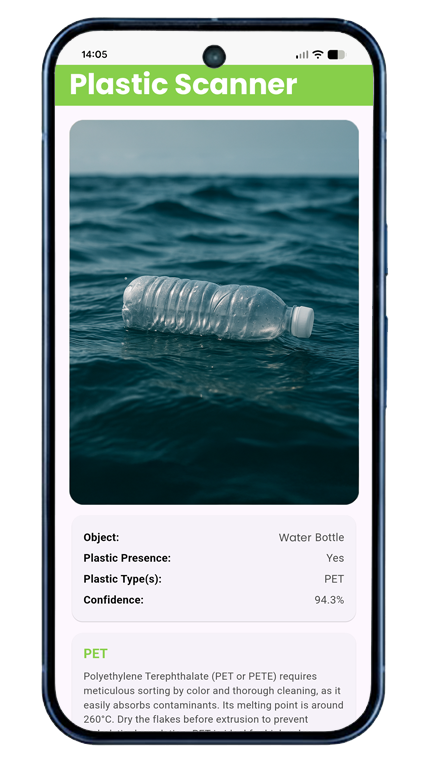
Take a photo. Get an answer.
No flames, no liquids, no special equipment. The app uses machine learning to identify the plastic type, and it works on dark and coloured plastics where resin codes are often missing or unreadable.
- Instant ID from a photo
- Covers 10 plastic types
- Works on dark and coloured plastic
- Evolving AI database
- Classroom and workshop friendly
- Free on iOS and Android
Resources that pair with this guide
Three picks from the Sustainable Design Studio resources library. Identifying your plastic is the start, the guides below take you the rest of the way: what each type is and how it behaves, which five we recommend most for desktop recycling, and the hands-on test data behind every material.
 Guide
Guide
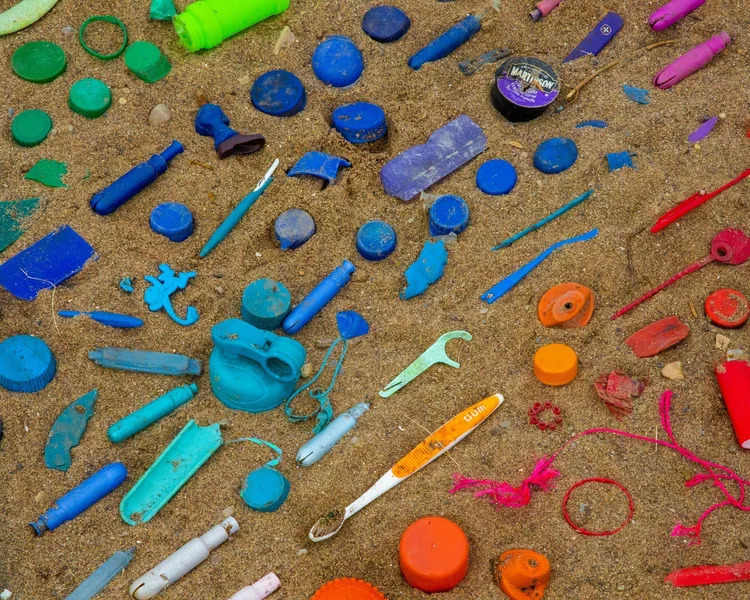
Plastic types
Everything you need to know about the seven types of thermoplastic, from PP to PET, and how each behaves when recycled.
 Guide
Guide
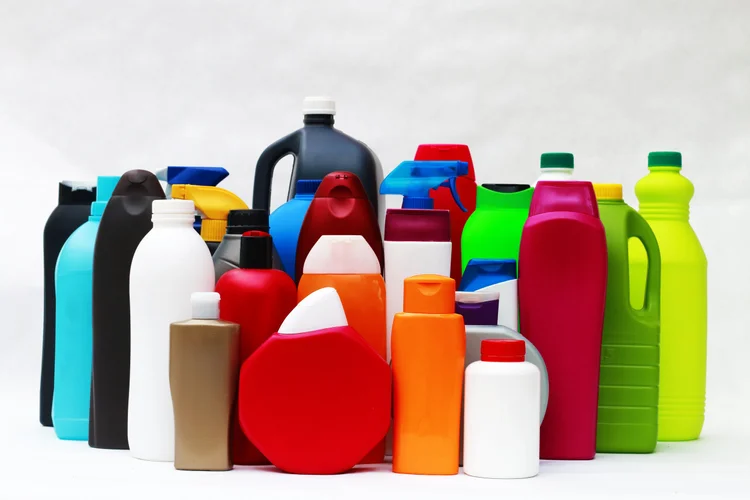
Our top 5 plastic types
The five plastic types we recommend most for recycling projects, and why they stand out.
 Reference
Material database
Hands-on test data for every plastic we have run through the Injection Mini V2: melt temperatures, shrinkage, MFI, observations.
Got a question? Send us a message
Not sure which machine suits the plastics you have? Our team replies within one working day, and we have helped makers in 94 countries get started.