
How to make money recycling plastic
A breakdown of the four stages between plastic waste and income, and what each kilogram is actually worth at every step.
Showing GBP · indicative rates
Why this guide exists
Most people picture plastic recycling as a cost, a council expense, a sorting hassle, a thing you do because you should. For a meaningful slice of the world, though, it is also a livelihood. Tens of millions of waste pickers, small workshops, and makers turn plastic waste into income every day.
This guide answers a question that does not get asked enough: how to make money recycling plastic at small to desktop scale, and how the maths changes depending on how far you process the material before you sell it.
We have outlined four ways to do it, and they sit on a value ladder. Each step up is harder, takes more kit, and pays disproportionately more for the same kilogram of input. We have worked out the per-kilogram economics of each using current European averages, plus a real-world example from Pangea, a Bali studio whose Kickstarter-funded sunglasses are made from mangrove cleanup plastic.
Four ways to make money recycling plastic
Each step sells the same plastic in a more processed form. Harder to reach, but worth disproportionately more per kilogram.
Collect and sell
Shred and sell
Pelletise and sell
Make and sell
Most of the world's industrial recyclers operate at Stage 3. Most small operators who try recycling at desktop scale stop at Stage 2, because shredding is the satisfying step. We think both are the wrong places to stop, for different reasons, and we explain why below.
Collect and sell
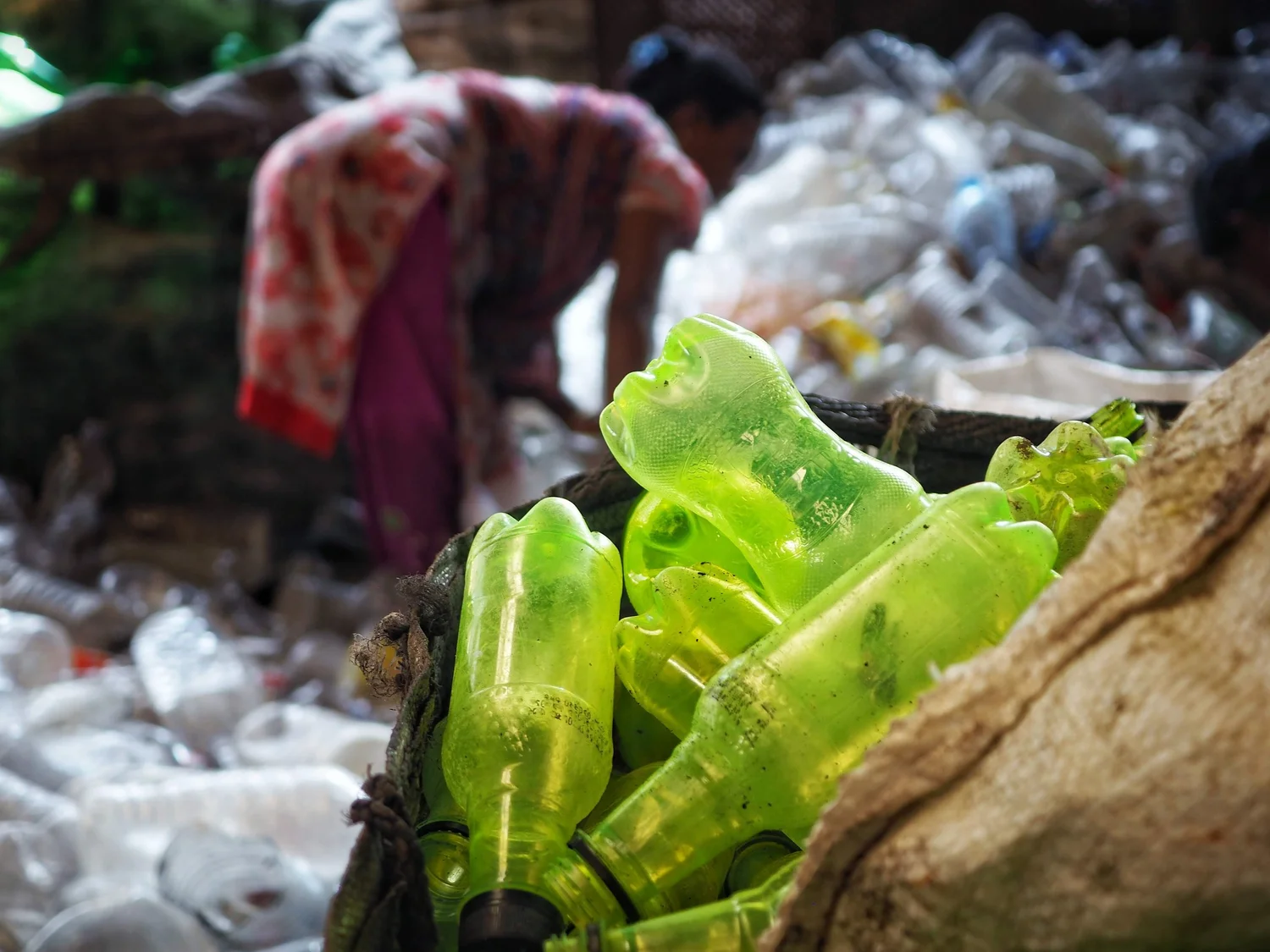
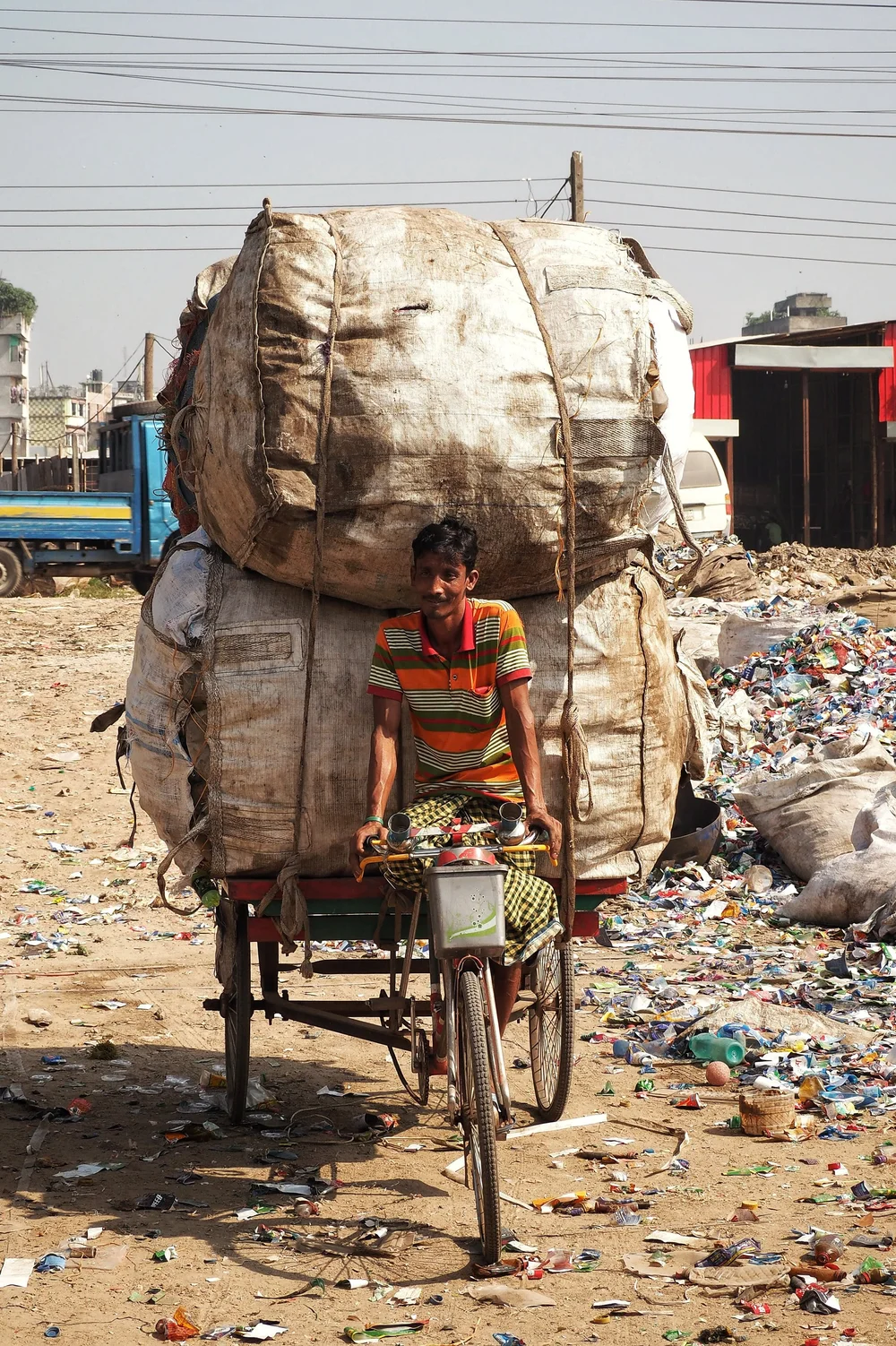
This is the entry point and the most common route worldwide. Waste pickers, kerbside collectors, small workshops, and informal aggregators sort plastic by polymer and colour, bale it, and sell it to a middleman or directly to a reprocessor. It is a real economy, often hidden from policy conversations, and in many countries it is the only meaningful recycling system that operates.
UK industrial averages put HDPE Mixed Colours bales at roughly £0.42/kg wholesale, and HDPE Natural at around £0.80/kg. At small scale, a collector typically sells to an aggregator for less, around £0.10 to £0.40/kg depending on the polymer and how clean the material is. PET drink-bottle bales sit at the lower end.
In practice, 100kg of sorted bottles, a sack full, might be worth £10 to £40. Enough to be worth doing, not enough to scale fast.
Financial data pulled May 2026.
The barrier to entry is the lowest on the whole ladder, a sack, a sorted pile, and a buyer, but whether it pays depends entirely on where you stand. In the UK, the National Living Wage is over £12.21 an hour. At £0.10 to £0.40 a kilogram, paying someone to collect plastic from the streets rarely adds up, they would need to gather tens of kilograms an hour just to match the wage floor.
In many other countries the minimum wage is a small fraction of that, and the same kilogram of plastic represents real, much-needed income. That is why collect-and-sell is a livelihood for tens of millions of people in some economies, and a non-starter in others. The maths is the same everywhere, what changes is the value of the hour you spend on it.
The ceiling is volume. To make a living from collect-and-sell you need a steady flow of clean, sorted material at meaningful tonnage, which usually means infrastructure, storage, transport, and a buyer relationship. Most people who do this professionally are part of a larger network. If you are new to identifying what is worth collecting, Our top 5 plastic types covers the materials with the most resale value, and the Plastic identification guide helps you sort what you have. Avoid PVC, mixed-grade Type 7, and anything contaminated, the cleaner the sort, the better the price.
The point of this guide is not to romanticise that work. It is to point out that the same person, with the right tools, can move up the value ladder and earn much more from the same kilogram of plastic.
Shred and sell
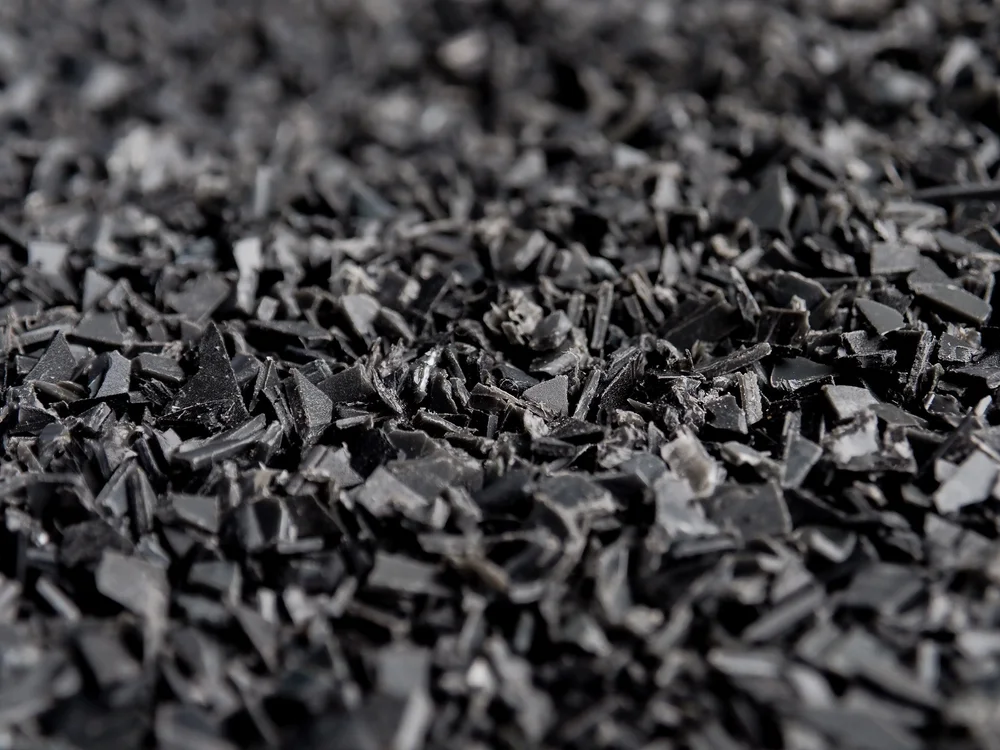
Instead of selling sorted plastic in bale form, you shred it into clean flake and sell the flake to other workshops, mould-makers, or small businesses making products. This is where the per-kilogram value starts to climb.
Clean shredded HDPE or PP flake sells for roughly £0.40 to £1.20/kg as a feedstock, depending on polymer, cleanliness, and certification. ISO, GRS, or FDA certifications add about £0.15 to £0.30/kg, but they require quality systems most small operations do not have. Without certification you typically sell to makers, schools, and small studios at the lower end.
The Desktop Shredder V2 is both a desktop machine and handles higher throughput than most shredders of its size and price. It takes the polymers most worth shredding (HDPE, PP, PS, ABS, PLA) and produces flake clean enough to inject or extrude downstream. The Plastic types guide covers which polymers shred cleanly and which do not.
Pros
- Roughly triples the per-kg price versus selling bale.
- Fragmented market, sell direct to small buyers, no industrial aggregators.
- Kit is small enough to run from a garage or classroom.
Cons
- Colour-separated flake takes more storage space than baled plastic.
- Needs consistent input, or your output colour drifts.
- Buyer pool is small, your customer is often also your competitor.
Why most small operators stop here. The jump to making finished products is not really about the plastic, it is about upfront capital and a steeper learning curve. Injection moulding is a new technical skill to learn on top of sorting and collecting, and the kit costs more than a shredder alone. Faced with that, many people stay at the shredding stage, where the value ceiling is still low.
This is exactly the gap Sustainable Design Studio is built to close. The machines, moulds, build guides, and cost tools are designed to walk you through each hurdle, from your first clean batch of flake to a moulded product you can sell, so the step up does not have to be taken alone.
Shredding scales well when it is shared. Across the world, communities pool an entire town or village's plastic waste, sort it together, and shred it into flake to sell on to bigger companies, turning a volume of scattered, low-value rubbish into a single saleable feedstock no individual could produce alone.
Co-operatives and entrepreneurs are already running exactly this model in dozens of countries. The reason it works as a paid, industrial-scale activity there and not in the UK comes down to the same wage economics: where labour is cheap, sorting and shredding plastic is viable paid work. In the UK the numbers only stack up if the labour is volunteer-led, which is why a community shredding scheme here is more likely to run through a school, a makerspace, or a local group than as a business.
Pelletise and sell
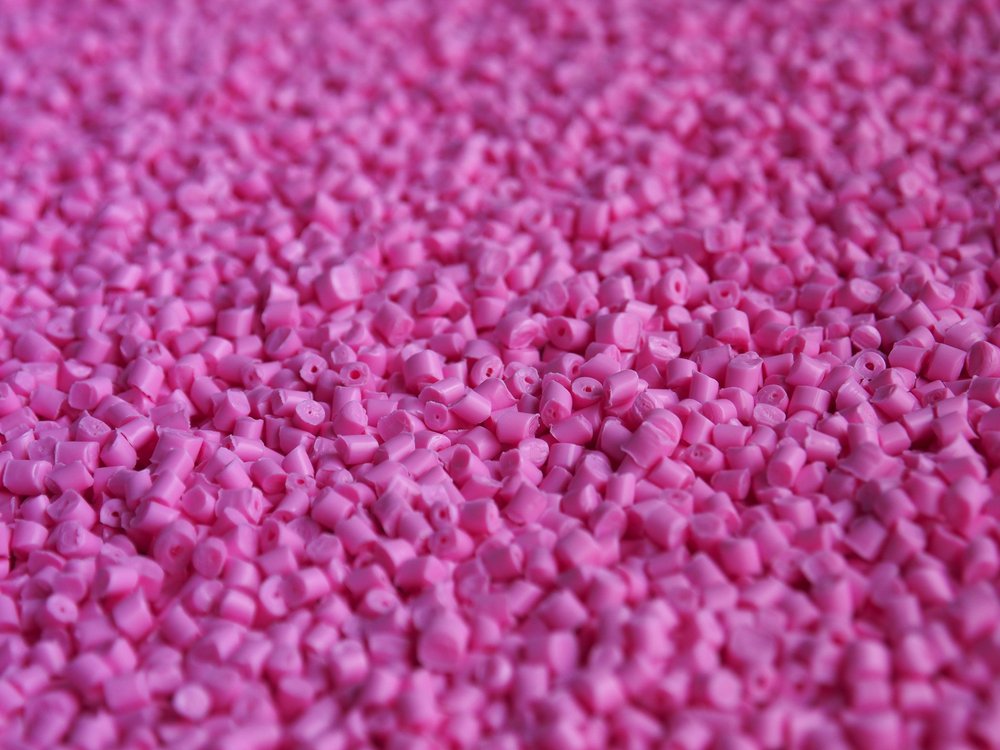
This is what most of the world's industrial recyclers actually do. They take clean flake, push it through a heated extruder barrel, cut the extrudate into uniform pellets, and sell those pellets to manufacturers who melt them down again to mould products. Pellets are the industry-standard form factor, the thing shipped in 25kg sacks and containers between reprocessors and factories.
Clean recycled HDPE or PP pellets sell for roughly £0.80 to £1.60/kg in bulk, sometimes £2.40/kg with full certification. That is a moderate uplift on shredded flake (£0.40 to £1.20), but the processing cost is significant. An extrusion line, a die, a pelletiser, energy for melt, plus drying and conditioning if you want to sell to anyone fussy about moisture or particle size.
Why Sustainable Design Studio does not make pellets. We sell extruders, but our Filament Maker turns recycled PET bottles into 3D printer filament, a finished feedstock for makers, not a generic industrial intermediate. We deliberately do not make a pelletiser, because the per-kg economics on pellets versus finished products are not close. For a small operator, every kilogram you turn into pellets is a kilogram you could have moulded into something with hundreds or thousands of times more value.
When pellets do make sense. If you already operate at industrial volume, have a sales team, and sell to manufacturers who want a drop-in replacement for virgin resin, pelletising is the right format. If you are a school, a side-hustle maker, or a small business with a brand, skip this stage entirely. Stage 4 is where the money is.
Make and sell
This is where 1kg of plastic stops being a raw material and starts being a finished product. The maths goes from incremental to transformational. Instead of selling someone else the feedstock or the pellets, you mould it into something a customer will pay retail for.
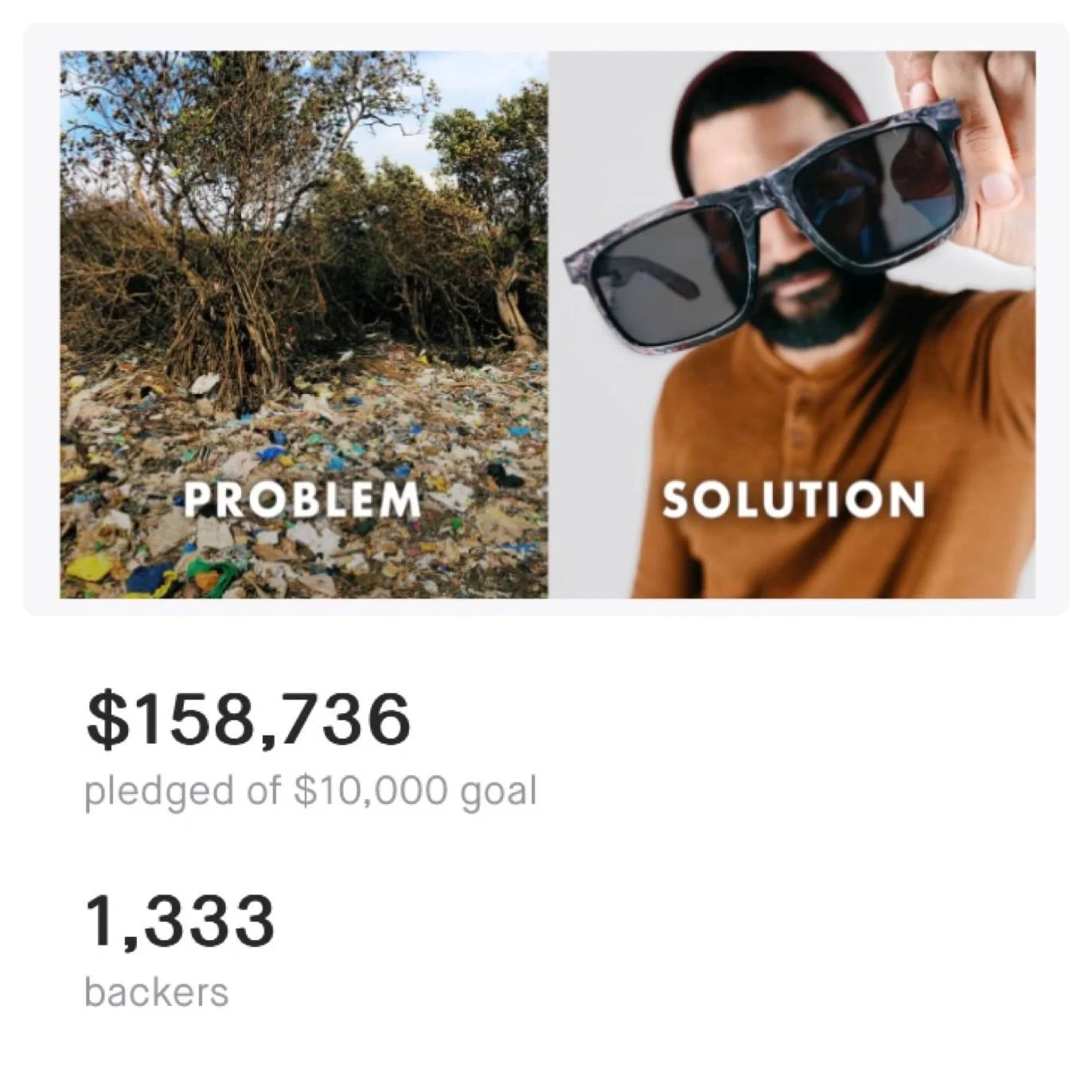
Sunglasses moulded from mangrove cleanup plastic
In early 2023, Pangea ran a Kickstarter for the Pangea Mangrove Sunglasses, sunglasses moulded from plastic collected during mangrove cleanups. The product retails at around £60 a pair and is now sold worldwide.
A real, public, verifiable example. Historical totals shown in their original USD. Source: Kickstarter.
That is before the lenses (the Pangea-style build uses pre-made replacement lenses, roughly £4 to £8 a pair), hardware, moulds, the machine, your time, energy, and overheads. The £2,400 figure is the start of the conversation, not the end. Use the Product cost calculator to model energy, labour, materials, mould amortisation, machine depreciation, and time, the things that turn a £60 retail price into a real per-pair profit. Built from our How to make V1 sunglasses guide.
The pattern holds even on conservative assumptions. Strip the lenses (£240 a kg if you go high), strip a heavy labour and overhead estimate, and the net value of 1kg of PP moulded into Pangea-style sunglasses still sits in the hundreds to low thousands of pounds. Compared to £0.40 for the same kilogram sold as bale, that is the ladder in one number.
One honest caveat. Sunglasses are close to a best case, a small, light, high-margin product that turns very little plastic into a lot of value. Stage 4 is a sliding scale, not a fixed multiplier. A chunky doorstop or a planter uses far more plastic per unit and sells for far less, so its per-kilogram return sits much lower down. What you make matters as much as the fact that you make it, which is why good product design is the difference between the top of this ladder and the middle of it.
An Injection Mini V2 or Arbour Injection Machine V2 for the moulding. A Premium Mould (the sunglasses mould is in the catalogue) for the part itself. A Desktop Shredder V2 to prep the input. A Fume Extractor V2 if you are working indoors. The Workshop setup examples and budgets page lays out what a starter, prototyper, or small-business setup looks like and what it costs.
The kg-to-value ladder
The same kilogram of PP, valued at each stage. The interesting part is where the uplift sits.
| Stage | What you sell | Typical value per 1kg |
|---|---|---|
| 1Collect and sell | Sorted bottle or container bale | ~£0.10 to £0.40 |
| 2Shred and sell | Clean PP or HDPE flake | ~£0.40 to £1.20 |
| 3Pelletise and sell | Recycled pellets | ~£0.80 to £1.60 |
| 4Make and sell | 40 pairs of sunglasses at ~£60 each | ~£2,400 gross retail before lenses, time, overheads |
Stage 1 to Stage 3 is roughly four to ten times the raw-material value, the entire range industrial recycling captures. Stage 3 to Stage 4, by itself, is roughly a thousand to two thousand times the previous stage. The leap is in the product, not the processing.
That is why the Sustainable Design Studio machines are engineered to skip Stage 3 entirely. Most desktop injection machines require pre-made pellets to feed the hopper, which means buying pellets or running a full pelletising line before you can mould anything. The Injection Mini V2 and Arbour Injection Machine V2 are built with wider feed openings designed to accept shredded flake directly from the Shredder Mini V2 or Desktop Shredder V2. Pellets are not an optional step we choose not to take, they are engineered out of the workflow. That is the design decision that makes Stage 4 economics accessible at desktop scale.
The catch is in everything else you have to add to make Stage 4 happen, the moulds, the time, the design work, the brand, the sales channel. The Product cost calculator is where you stress-test whether the numbers work for your specific setup.
Choosing where to operate on the ladder
Not everyone should aim for Stage 4, and this guide would be dishonest if it told you they should.
Shredding plus simple products like rulers, keyrings, and beads. The educational value is the real return, not the per-kg margin. See the Educational Setup in Workshop setup examples and budgets.
Start small, refine one mould, and work the cost calculator honestly. See the Budget Injection Setup or the Prototyper Setup on the same page.
A small range, branded, sold direct to consumer, the Pangea model. Higher upfront cost, real return potential. See the Small Business Setup.
A different business model and infrastructure. This guide is not the right starting point for that route.
Containerload volumes, manufacturing buyers, established sales relationships. Not the Sustainable Design Studio audience, but worth understanding the stage exists so the ladder makes sense.
Resources that pair with this guide
Three picks from the Sustainable Design Studio resources library. Knowing the value ladder is the start, the guides below take you the rest of the way: the full build for the worked example, the budgets to plan your kit, the cost calculator to stress-test the numbers, and the plastics worth the most at every stage.
 Guide
Guide
How to make V1 sunglasses
The full step-by-step build for the worked example above, from flake to finished pair.
 Tool
Tool
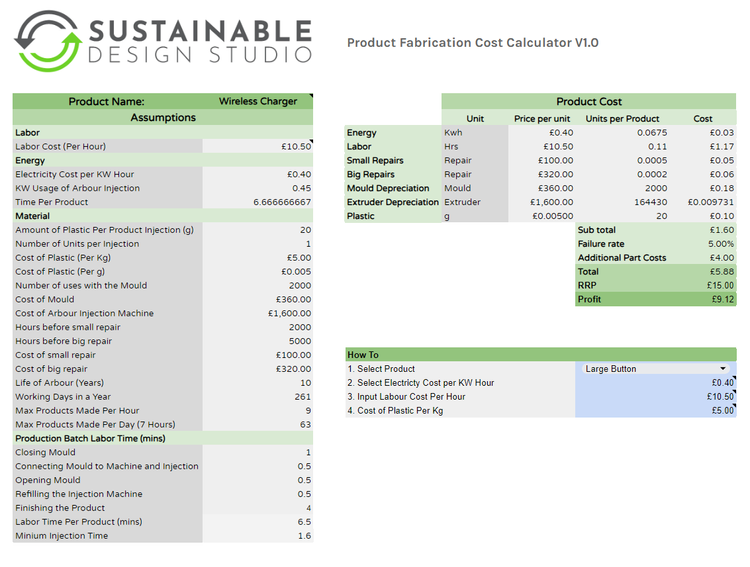
Product cost calculator
Convert retail prices into honest per-product profit. Models energy, labour, mould amortisation, and time.
 Reference
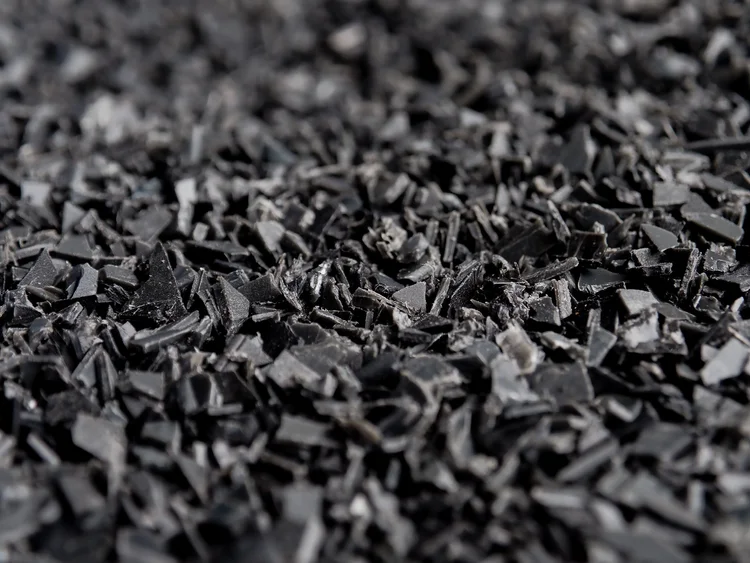
Material database
Hands-on test data for every plastic we have run through the Injection Mini V2: melt temperatures, shrinkage, MFI, observations.
Got a question? Send us a message
Not sure which machine suits the plastics you have? Our team replies within one working day, and we have helped makers in 94 countries get started.